Backstop Netting Systems, Explained: Height, Width, Netting and Installation
By PitchEquipment Team
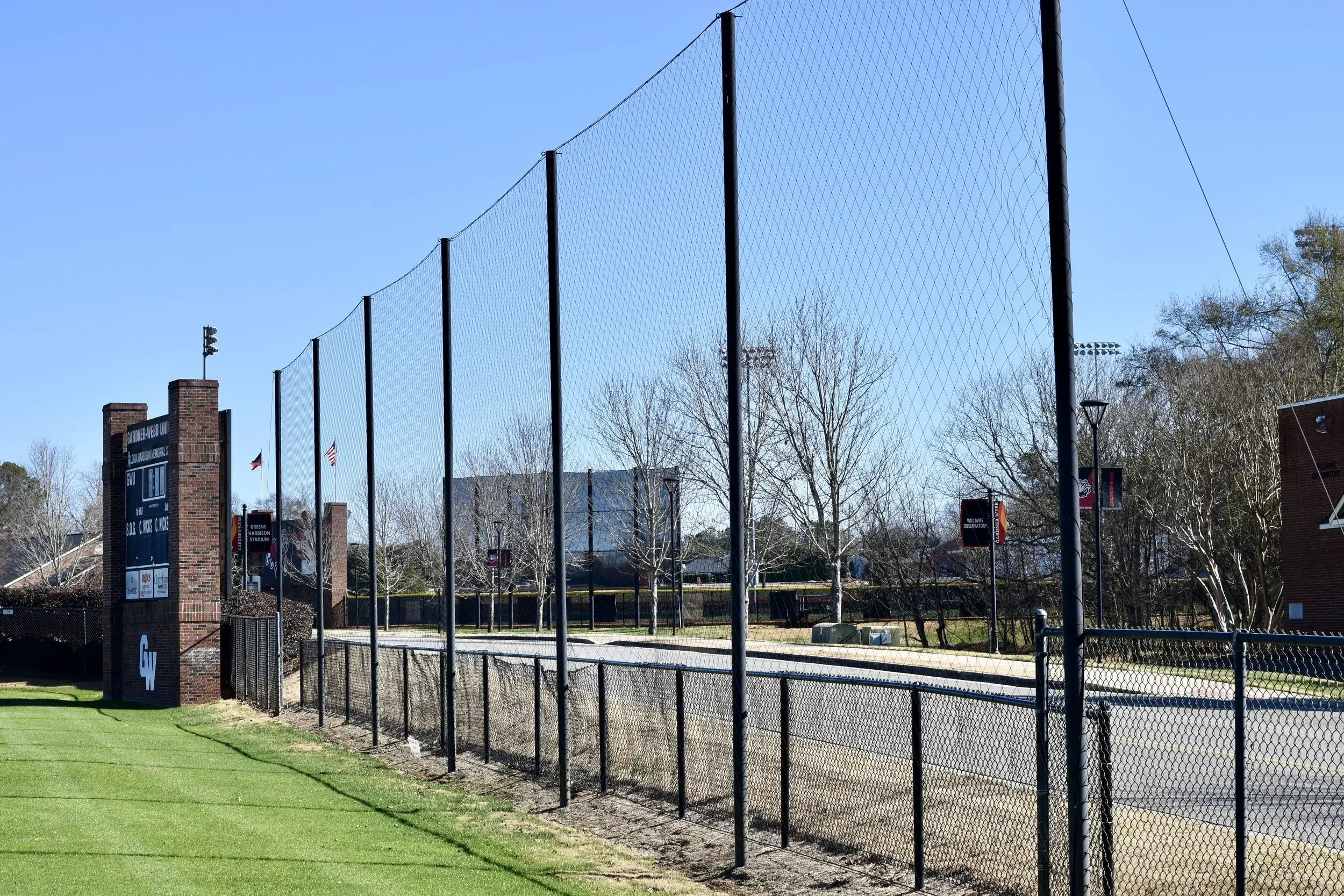
A backstop netting system is a run of tall columns and netting that keeps balls in play and keeps them away from people, parking lots, and neighbors. It stands behind a soccer goal, a lacrosse or field hockey cage, home plate, or a football end zone. Soccer, lacrosse, field hockey, baseball, softball, and football all pose the same problem: a ball that leaves the field. Defender Series backstops are built for that job in one shop in Shelby, North Carolina. Every system includes the aluminum columns, the netting, and the hoist.
What does a backstop actually do?
It contains balls behind the goal, the cage, home plate, or the end zone, so a shot or a foul stops at the net instead of reaching spectators, a parking row, or the field next door.
That is a safety question and a lost-ball question. A ball that gets past the field reaches people, a parking lot, or the field next door. Multi-use complexes are our most common installation, because one end of the grounds often serves more than one sport in the same week. The same Defender Series system is used for soccer behind the goal, lacrosse and field hockey behind the cage, baseball and softball behind home plate, and football in the end zones.
How tall should a backstop be?
Twenty feet covers nearly every sport a program is trying to contain.
That is the standard Defender Series height: high enough for baseball and softball foul balls, lofted soccer and lacrosse shots, and field goals sailing past the net. Twenty feet is what the standard systems are built to. A taller net is sometimes what a particular site needs, and the standard height is not a claim that nothing above it is ever useful. We build custom backstop systems when 20 feet is not the right call for the field.
How wide should a backstop be?
PitchEquipment offers three standard widths. The DS-65 is 20 feet by 65 feet at $3,099. The DS-90 is 20 feet by 90 feet at $8,199. The DS-120 is 20 feet by 120 feet at $10,999. Those prices do not include freight. Which width to choose is guidance from the field and from what sits beyond it, not a shop rule that assigns one model to a sport.
Soccer, behind the goal. A regulation soccer goal is 7.32 meters, or 8 yards, about 24 feet wide, under IFAB Laws of the Game, Law 1. A DS-65 leaves roughly 20 feet of net past each post, which is enough for most single-goal fields. Prefer a DS-90 or a DS-120 when the end line backs onto parking, spectators, another field, or a multi-use complex where balls leave the frame more widely. Commercial soccer backup systems are commonly sold in 60-, 90-, and 120-foot lengths, the same range as these three widths.
Lacrosse or field hockey, behind the cage. A men's lacrosse cage opening is 6 feet by 6 feet under NCAA men's lacrosse rules. A field hockey goal mouth is 3.66 meters (12 feet) wide and 2.14 meters (7 feet) high under FIH and NCAA field hockey rules. Both cages are much narrower than a soccer goal, so a DS-65 usually covers a single cage with generous overhang. Prefer a DS-90 or a DS-120 on a shared multi-sport end line, or when the runoff is wide and balls leave the crease or the shooting circle off-center.
Baseball and softball, behind home plate. Width here is foul-ball and wild-pitch coverage along the backstop arc, not a goal opening. Facility guides and commercial netting vendors commonly put softball and many school fields around 60 feet of backstop width, and fuller baseball diamonds toward 90 to 100 feet. Within this line, a DS-65 is a practical starting point for many softball and school diamonds, a DS-90 is the recommendation for fuller baseball coverage, and a DS-120 is the recommendation for a larger college-style diamond or a multi-diamond, multi-use install.
The right width depends on what is behind the goal, the cage, or the plate, how far balls travel off line, and what is at risk past the field. Need a different size? We build custom systems. Send the field dimensions.
What do #21 nylon and 5-inch mesh mean?
#21 nylon is the weight of the twine, and 5-inch square mesh is the size of each opening. The net is meant to stop a ball and still let spectators see through it.
#21 nylon netting withstands repeated ball impacts without stretching. It is heavier commercial twine, specified for the hits a goal, a cage, or a plate actually takes. The 5-inch square mesh stops balls while maintaining visibility for spectators, so the end of the field stays open to look through. A 5/16-inch twisted rope border spreads tension evenly across the net, so the load is shared around the edge instead of hanging on one corner. The net hangs from a built-in hoist, which is how it comes down for maintenance or for the off-season.
Aluminum columns vs other materials
The columns are aircraft-grade 6061 aluminum, 4 inches in diameter, set in concrete so the system stays square in a crosswind.
Aluminum does not rust the way bare steel does. On columns that stand outside year-round, that is the material difference that matters. Each column is 4-inch aircraft-grade 6061 aluminum. The columns carry the net and the hoist, and they are set in concrete. That is the structure the net hangs on.
How is a backstop installed?
Installation is not included in the price. It is available in North Carolina and South Carolina by quote. Elsewhere, the buyer installs the backstop or hires a local contractor.
Columns are set in concrete and the netting is hung on site. Pad or footing preparation is not included. That preparation is the buyer's to arrange, and the columns are set in concrete once that preparation is done. The netting is then hung on the columns.
How long does backstop netting last, and how do you care for it?
With proper care, commercial nylon netting lasts 7–10+ years.
Lowering the net in the off-season is the care that matters. The hoist is how you do it: one person can raise or lower the full net in minutes. Take the net down when the season ends and put it back up when play starts. The 7–10+ year span is the expected life of the netting when that is the routine. Budget the net against that expected life.
Backstop vs batter's eye
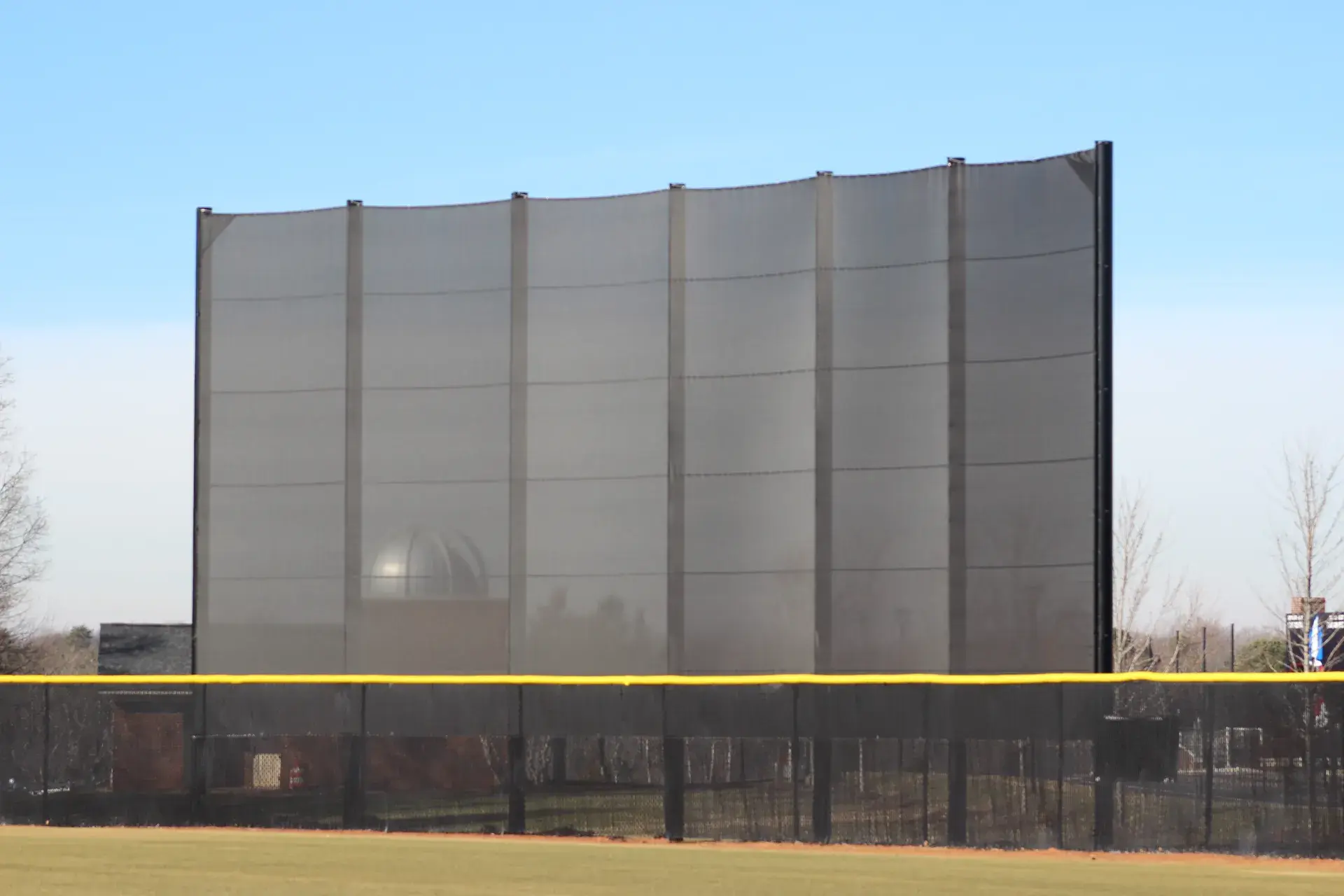
A backstop sits behind home plate and protects people from foul balls and wild pitches. A batter's eye sits in center field purely for pitch visibility — the batter's eye guide covers that screen. Batter's eye screens don't ship; our crew installs them in the Southeast.
What does a backstop cost?
A DS-65 is $3,099, a DS-90 is $8,199, and a DS-120 is $10,999, before freight. Standard systems start from $3,099.
Prices do not include freight. Shipping is calculated after the order is submitted. Standard lead time is 4–6 weeks. Backstops ship nationwide and to Canada. The prices are posted on the Defender Series backstops page and on the pricing page, and they run 15–20% below comparable national-brand products.
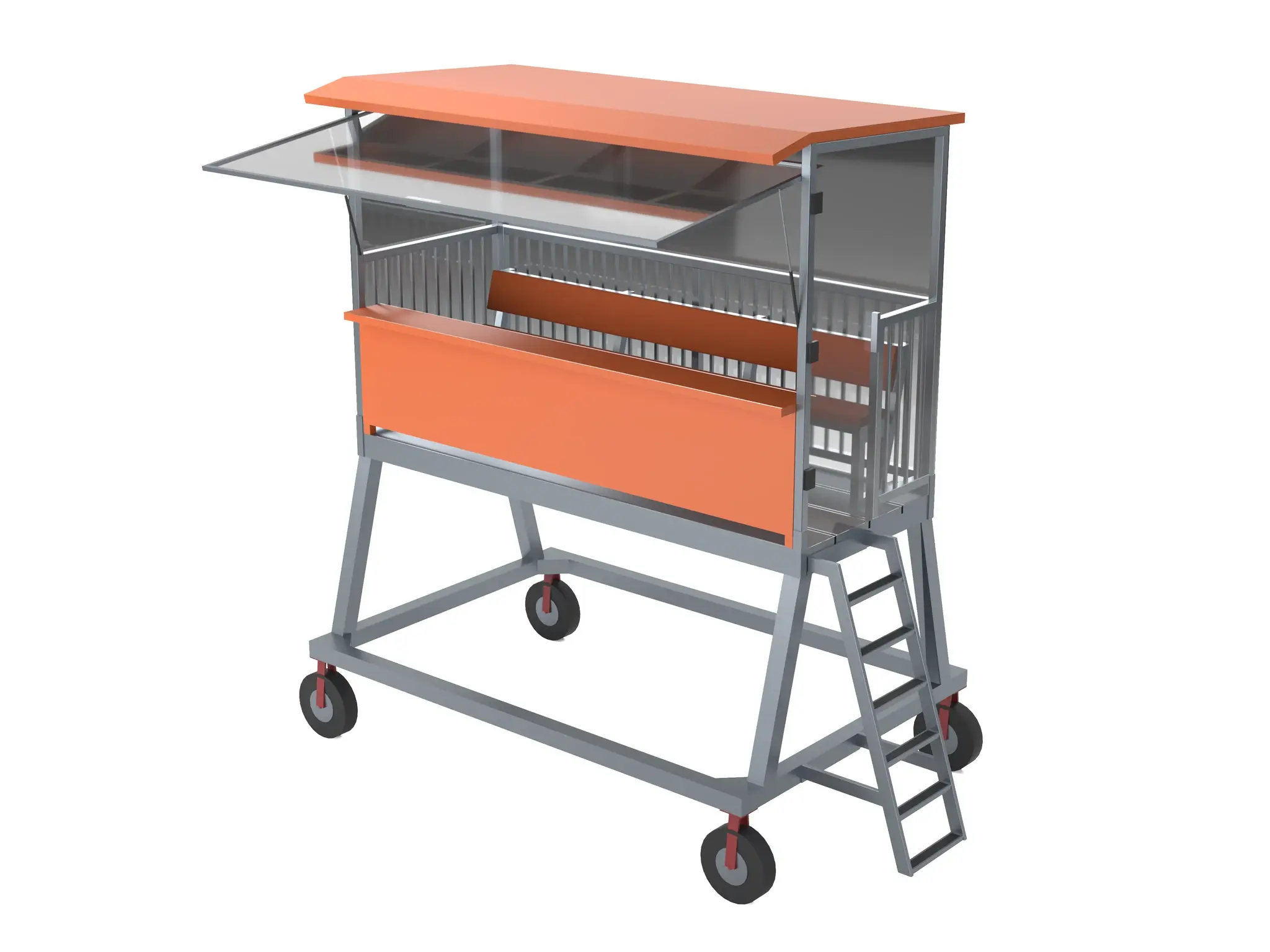
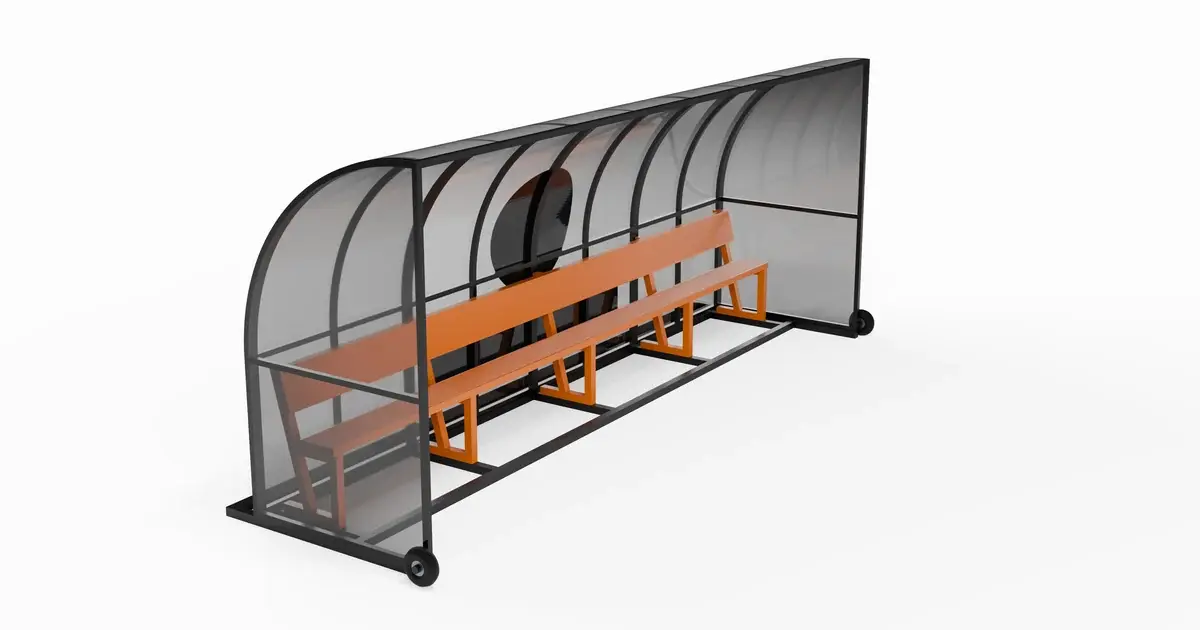
PitchEquipment is family-owned and has built in one shop in Shelby, North Carolina, since 1994 — 32 years. The company warranty is 3 years. We ship to all 50 states and Canada (batter's eye screens are installed, not shipped). Resellers can look at the dealer program. The rest of the line includes team shelters for the sideline.
Frequently asked questions
Do backstops ship?
Yes. Backstops ship nationwide and to Canada. The price does not include freight. Shipping is calculated after the order is submitted.
How long does it take to get one?
Standard lead time is 4–6 weeks.
Can one person raise and lower the net?
Yes. One person can raise or lower the full net in minutes with the built-in hoist.
Do you build custom sizes?
Yes. We build custom backstop systems for non-standard widths.
Is installation included?
Installation is not included in the price. It is available in North Carolina and South Carolina by quote. Elsewhere, the buyer installs the backstop or hires a local contractor. Pad or footing preparation is not included. Columns are set in concrete and the netting is hung on site.
Pick a size on the Defender Series backstops page, or send us your field dimensions for a custom system. Call 866-482-0221 or email sales@pitchequipment.com.