Custom Batter's Eye Screens
Every batter's eye is engineered from scratch for your specific baseball or softball field. We don't sell off-the-shelf panels — we design, fabricate, and install complete systems sized to your outfield geometry, sight lines, and budget. Mesh panels for high school budgets, perforated steel for NCAA and pro facilities.
This is a permanent structural installation, not a catalog purchase — engineering, permitting, and concrete foundations are part of every project, and we handle all of it. Our install crews cover the Southeast US.
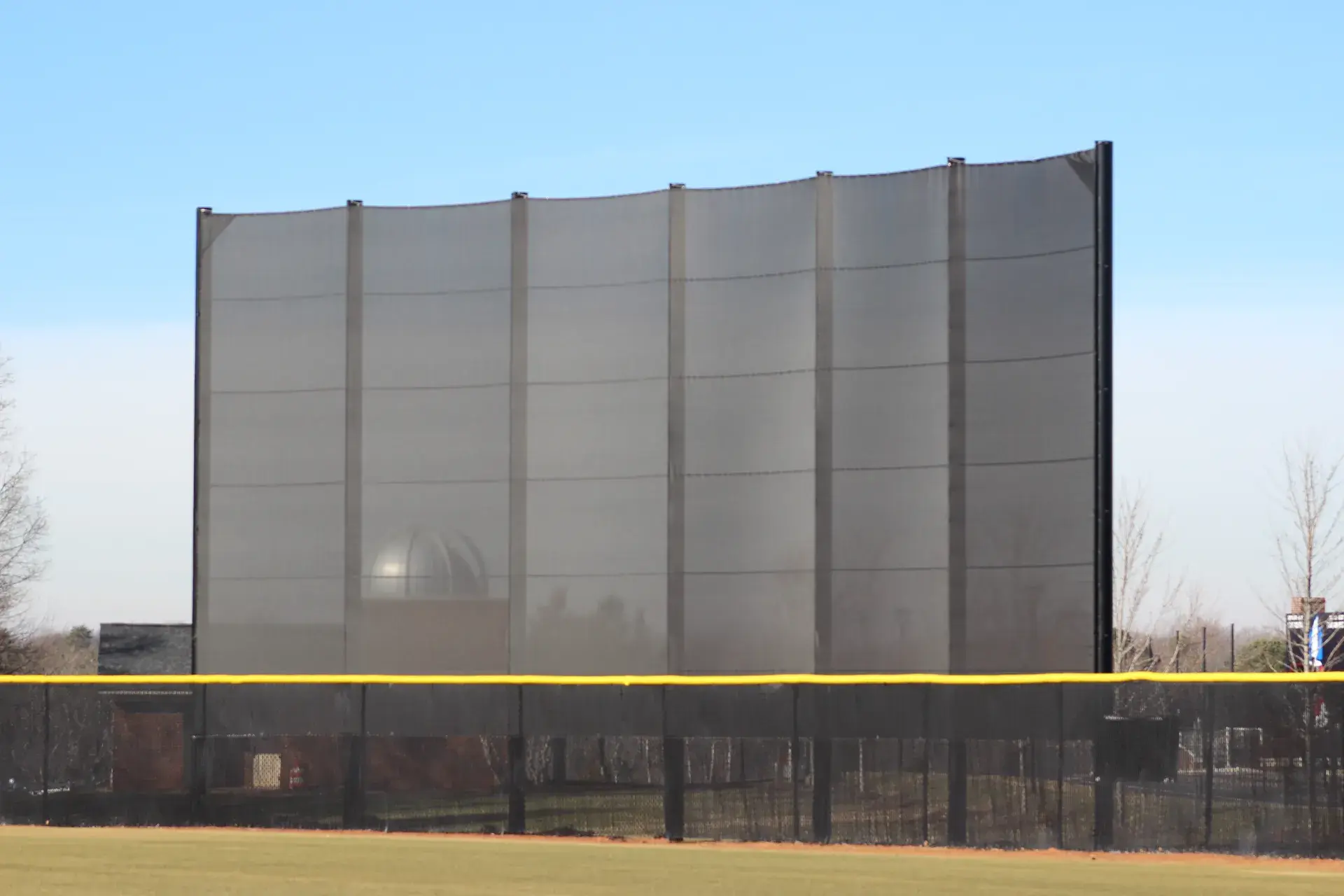
What Is a Batter's Eye?
A batter's eye (sometimes written "batters eye") is a dark backdrop in dead center field, in the batter's line of sight to the pitcher. It gives hitters a clean background so they can see the ball the moment it leaves the pitcher's hand.
Read the full guide: What Is a Batter's Eye? The Dark Backdrop Explained.
How We Work
1. Field Assessment
Send us your center field dimensions, fence height, and photos. We'll identify what's behind the fence that affects your sight-line requirements.
2. Design Recommendation
We'll propose the optimal width, height, and material system for your facility and budget. No generic sizing charts — each design is specific to your field.
3. Fabrication
Your batter's eye is built in our North Carolina shop using your exact specifications. Typical lead time: 4-6 weeks.
4. Installation
Our crew handles the full install — concrete foundations, structural mounting, and final inspection. One team, one point of contact, start to finish.
Who We Work With
A batter's eye is a capital project. Whether you're running a program or building a facility, we plug into your process.
Coaches, Athletic Directors & Parks Departments
For high schools, colleges, and public parks & rec facilities, we handle the parts a program can't: structural engineering, permitting with your local building department, concrete foundations, and installation by our own crew.
We'll also help you build the case internally — detailed written quotes, spec sheets, and budget ranges you can take to a booster club, facilities committee, or bond planning process.
Contractors & Facility Builders
Building or renovating a stadium, athletic complex, or ballfield? We work as a specialty design-build subcontractor for the batter's eye scope — bid-ready quotes, sealed engineering drawings when the jurisdiction requires them, and coordinated scheduling with your site work.
One point of contact covers design, fabrication in our North Carolina shop, and installation, so the scope closes out clean.
Batter's Eye Cost
Projects typically range from $40,000 to $100,000+ installed, depending on size, materials, and site conditions.
High School Fields
$40,000 – $55,000
Mesh panel systems, 30–40 ft wide, aluminum frame, concrete foundations, full installation.
College Facilities
$55,000 – $80,000
Larger mesh or perforated steel panels, 40–50 ft wide, heavier structural support.
NCAA Division I / Professional
$80,000 – $100,000+
Full perforated steel construction, 50–60+ ft wide. Perforated steel is about $15,000 more than mesh.
Size & Material
Width and height drive most of the cost — each added 10' of width runs $3,000-$6,000. Perforated steel is about $15,000 more than mesh.
Installation
Typically 15-25% of the project. Fence retrofits run $3,000-$5,000 in labor; standalone structures with full foundation work can reach $10,000-$20,000.
Foundations
Fence-mount brackets are the most economical. Ground-mounted posts need concrete footings — $2,000-$5,000 for a typical 4-post system.
Upkeep
Budget $200-$500/year for inspection and cleaning. Damaged panels replace individually, and aluminum frames never need refinishing.
Every project is custom, so we quote based on your specific requirements. Contact us with your field dimensions and we'll provide a detailed estimate within a few days.
Batters Eye Installation & Engineering Specifications
Technical details matter when you're investing in a permanent baseball facility upgrade. Here's what goes into a professional batter's eye installation:
Standard Dimensions
- Width: 30-60 feet (most common: 40-50 ft)
- Height: 16-32 feet (most common: 20-24 ft)
- Panel sizes: Typically 8-10 ft wide per section
- Frame depth: 4-6 inch aluminum extrusions
Wind Load & Structural Engineering
- Wind rating: Engineered for 90+ mph sustained winds
- Design standard: IBC structural code compliance
- Mesh systems: ~40% wind pass-through reduces load
- Solid panels: Full wind load calculations required
Foundation Types
- Fence-mount brackets: Most common, lowest cost
- Concrete footings: 18-36" deep, 12-16" diameter
- Sleeve anchors: Steel sleeves set in concrete
- Ground mount: Surface-mount base plates for portable installs
Material Specifications
- Frame: 6061-T6 aluminum (aircraft-grade)
- Mesh: Vinyl-coated polyester, 14-18 oz weight
- Perforated steel: 16-20 gauge, powder-coated
- Fasteners: Stainless steel hardware throughout
Lead Time & Installation
- Fabrication: 4-6 weeks from approved drawings
- Installation time: 1-2 days for most projects
- Crew size: 2-4 installers depending on system size
- Site prep: Typically 1 day before install
Warranty Coverage
- Structural warranty: 3 years on frames and mounting
- Coating warranty: 5 years on powder coat finish
- Mesh panels: 2 years against manufacturing defects
- Installation: 1 year workmanship guarantee
Engineering Note: Projects exceeding 500 square feet of panel area or installations in high-wind zones (coastal regions, tornado alley) typically require stamped structural drawings from a licensed engineer. We include engineering consultation in our quotes and can provide sealed drawings when required by your local building department.
Gallery
Frequently Asked Questions
What is a batter's eye (batters eye)?
A batter's eye — also commonly searched as "batters eye" — is a solid, dark-colored backdrop positioned in dead center field that helps batters see the baseball as it leaves the pitcher's hand. It creates visual contrast that makes it easier to track the pitch.
What size batter's eye do I need?
Most batter's eyes are 30 to 60 feet wide and 16 to 32 feet tall. The ideal size depends on your outfield dimensions, fence height, and what's behind center field.
What color should a batter's eye be?
Dark green and black are the most common choices because they provide the best contrast against a white baseball. Custom colors are available to match your facility branding.
How long does a batter's eye last?
A properly installed batter's eye screen will typically last 15-20 years with basic maintenance. The aluminum frame structure can last even longer. Mesh panels may need replacement after 10-15 years depending on weather exposure, while perforated steel panels often last 20+ years.
Can you retrofit a batter's eye to an existing fence?
Yes—retrofitting to an existing outfield fence is actually our most common installation type. We design mounting brackets that attach securely to your current fence structure, whether it's chain-link, vinyl, or another existing backstop. This approach saves significant cost compared to building a standalone structure.
What's the difference between mesh, perforated steel, and solid panels?
Mesh screens let wind pass through, which reduces structural load. They're lighter and the usual choice for high school budgets. Perforated steel is a different panel: stronger visual contrast, a more professional appearance, and about $15,000 more than mesh, with heavier structural support. Solid panels are a separate product. They block the wind and need full wind-load calculations. College and pro facilities often prefer perforated steel.
Where do you install batters eye screens?
We provide full-service batter's eye installation throughout the Southeast US. Every project is handled end-to-end: field assessment, design, fabrication, concrete foundations, and installation by our crew.
What maintenance does a batter's eye require?
Minimal maintenance is required. We recommend an annual visual inspection to check for loose fasteners or damaged panels. Pressure washing once a year keeps the surface clean. If a mesh panel is damaged by a baseball or debris, individual panels can be replaced without removing the entire system. Aluminum frames require no painting or special treatment.
Ready to Upgrade Your Field?
Let's discuss your batter's eye project. We'll help you determine the right size, color, and configuration.